This generation of tertiary students need realistic expectations, strong support and opportunities for personal growth.
This article risks framing a generation’s distress as a problem of fragility when the reality is far more complex.
As a psychologist who works daily with adolescents and young adults, I am not surprised that universities are reporting sharp increases in students identifying as neurodivergent, seeking counselling, or delaying entry into full-time work. What would be surprising is if they were not.
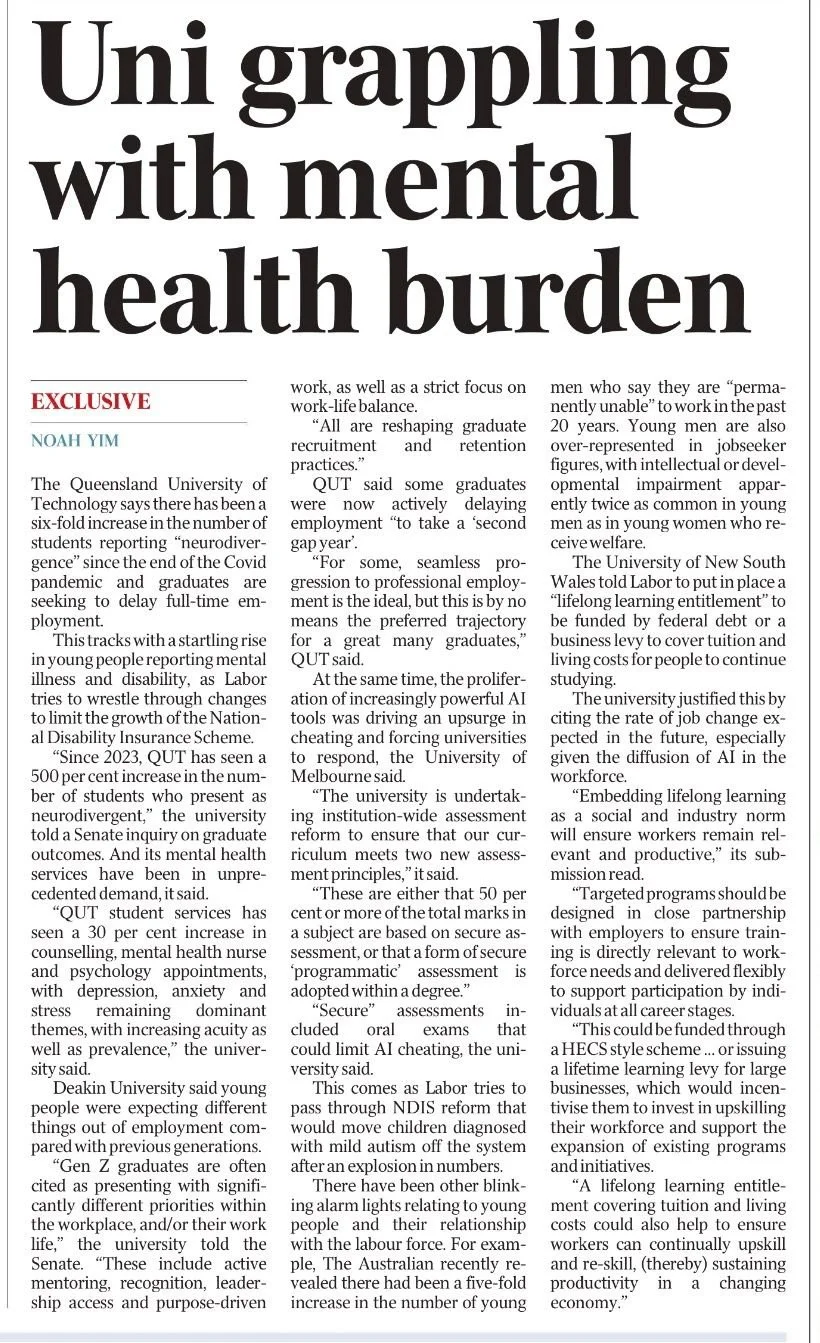
This generation came of age through a pandemic, prolonged social isolation, unprecedented housing unaffordability, economic uncertainty, relentless academic competition and an online world that exposes them to a constant stream of comparison, outrage and bad news. Their distress did not emerge in a vacuum.
At the same time, we should be cautious about interpreting rising rates of diagnosis and help-seeking solely as evidence of worsening mental illness. Greater awareness, reduced stigma and improved recognition of neurodevelopmental conditions have undoubtedly contributed to the increase. Many young people who would previously have struggled in silence are now seeking support.
The more concerning finding is not that universities are overwhelmed by counselling demand. It is that increasing numbers of young people appear uncertain about their capacity to enter and remain in the workforce. If young adults believe they are permanently unable to work, we should ask whether we have inadvertently created systems that emphasise vulnerability without equally emphasising competence, resilience and recovery.
The challenge for universities, governments and employers is therefore twofold: provide appropriate support for genuine mental health difficulties while also helping young people develop confidence, agency and a sense of purpose. The goal of higher education cannot simply be to keep students well; it must also be to prepare them to participate meaningfully in adult life.
Young people do not need less expectation. They need realistic expectations, strong support and opportunities to discover that they are often capable of more than they think.