Put the phone down and look up: what Spielberg's new film taught me — and what i can teach our kids
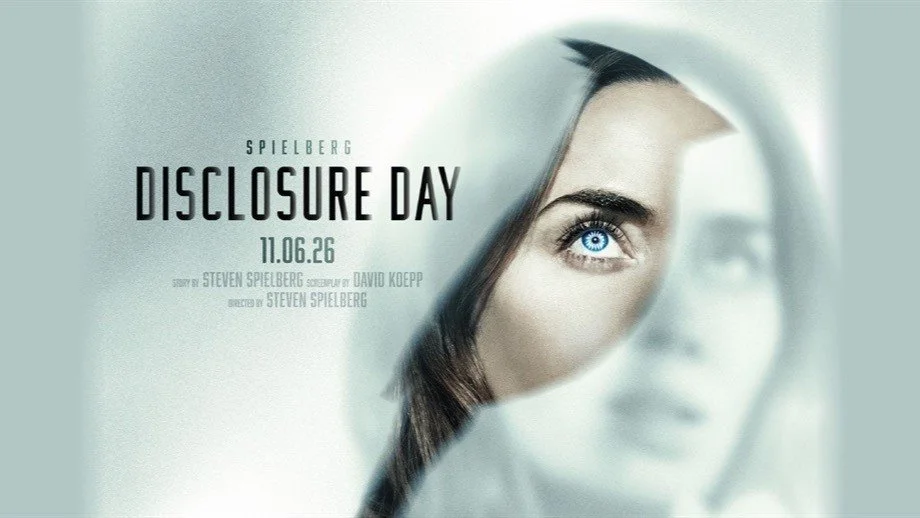
I swore I would not do another movie review - after my piece on Project Hail Mary, but again apologies to Margaret Pomeranz and David Stratton, I just saw the new Stephen Spielberg movie and just can't help myself.
I was a long way from being a kid the first time a Spielberg movie floored me in the dark, but it made me one. It was 1977. I was a university student with a way too much artistic flair for a movie about flying saucers, and I walked into "Close Encounters of the Third Kind" fully ready to be unimpressed.
But two hours later I was anything but. I can still sense the whole cinema lean forward: regular people staring down at a vision they couldn’t articulate; Richard Dreyfuss heaping a mountain out of mashed potatoes at the dinner table as his family were horrified, all around him; those five notes, humanity and its universe rubbing up against each other, one chord at a time; and the great ship finally flying down over Devils Tower in one cathedral of light.
And then I stumbled out into the night and did something I hadn’t done since I was a child. I looked up. Properly. At the real sky. Half-hoping, half-terrified that something could look back. That feeling has a name. Psychologists call it awe. I didn’t have the words for it then. All I knew, was that suddenly this world had become big, and I had felt smaller and more alive at the same time.
Almost fifty years later, I took my wife, and we sat down to another Spielberg film about what was up in the sky. This time I left with more than a lump in my throat. I had some thoughts to share.
"Disclosure Day" is a sci-fi story about a whistleblower played by Josh O'Connor who thinks the world is being lied to about if whether we are alone in the universe. It turns out a cybersecurity expert discovers the proof, a corporation attempts to bury it, and a small-town weather presenter (Emily Blunt) gets entangled in the hunt.
The question lingering over all of it is this: if someone could ever show you the truth, would it be terrifying to you? When the movie finished, I sat in the dark and kept thinking of one of my old friend, Ross Coulthart, who received five Walkley awards, including the Gold Award and one of the most dogged investigative journalists this country created: who has spent quite a few years on precisely that landscape.
His book "In Plain Sight" argued, much earlier than Hollywood realised that the evidence has been laying in front of our eyes for years, reported, filmed, registered and then ignored or denied while the authorities looked the other way. Ross took the routine crap for doing so, it being the usual Australian reward for being just on time and who knows, perhaps on the right track.
Spielberg has now invested an estimated $115 million in the dramatisation of the story my friend has been speaking into a microphone for over a decade. But take away the UAP's and the John Williams score, and the movie is not about aliens, really. It’s about disclosure, about the truths being spoken directly in front of us, the truths we never seem able to face.
I've seen that film before. No aliens. Just young people and a truth about them that’s been right there the whole time, drowned out by the noise. It is the title of Ross’s book I keep coming back to. In Plain Sight. Because the very thing our kids most need from us has been sitting there in plain sight all along. All we have to do, it turns out, is to be able to see it and Spielberg spends his whole film explaining to us how.
Lesson 1: awe is the medicine we’ve stopped issuing prescriptions. Spielberg has pursued awe ever since that mountain of mashed potato in 1977, the absolute shiver of the entire body in which something vast makes you feel gloriously small. The research has his back: awe settles the nervous system, quiets the endless rumination, and takes us back toward other people.
The trouble is many young people haven’t gasped at anything vast, in years. They're not looking up. They’re gazing down at a tiny bright rectangle that never runs out and never enables the mind to quiet down. We’ve given them everything but wonder, and then pretend to be astonished when they’re worried.
Lesson two: we have confused safety for wellbeing. The film keeps questioning whether the truth would scare us. It’s a question parents will find wrong. Australian parents have attained a podium finish when it comes to trying to keep children safe, supervised, scheduled, chaperoned and risk-assessed to within an inch of their lives, and somewhere along the way we confused the absence of risk with the presence of health. We wouldn’t let a child scramble up a tree, become gloriously bored or walk home in the dark. But awe has to be a little wild, and we’ve crafted it softly from childhood. Protect them, of course. But don’t close the door; let the door to wonder be opened.
Two and a half hours of spectacle, Disclosure Day concludes not with a starship, but with one word. Emily Blunt, turns and looks down the barrel of the camera, directly at us and says one thing: "Listen." Then black. Spielberg’s whole message, it seems, is neatly contained in a set of six letters: don’t look, don’t speak, but listen to one another.
Talking at adolescents is one of our world-class skills. We lecture, we warn, we inquire whether they’ve “tried breathing.” The one thing we keep forgetting to do is the last word in the film. A young person who has a sense they’re being heard at the kitchen table is a young person who needs the screen just a little bit less.
Most of the young people I meet aren’t asking us to fix them. They're asking us to listen. So, this weekend, put your phone in a drawer, because you check it 47 times before breakfast and the children have absolutely noticed. Take them somewhere the city glow can't reach, and look up. June is about the best the Melbourne sky gets: the Milky Way spilled clean across it, the Southern Cross riding high in the south. Find the two bright stars beside the Cross and aim a finger at the nearer one, Alpha Centauri, the closest star to our own sun. The light arriving in your child's eye tonight left it four years ago and has been crossing the dark ever since. Point. And then, Spielberg's orders, not mine, stop talking, and listen. Side effects may include conversation, fresh air, and a teenager muttering "this is so random." Persist anyway.
Because the truth they need isn't out there among the stars. It's in the look on their face the moment they lift their eyes from the screen, the same look I had walking home in 1977, and in whatever they say next, if we can manage the single hardest thing we ever do as parents, and simply listen.