Betting against our youth — the house always wins
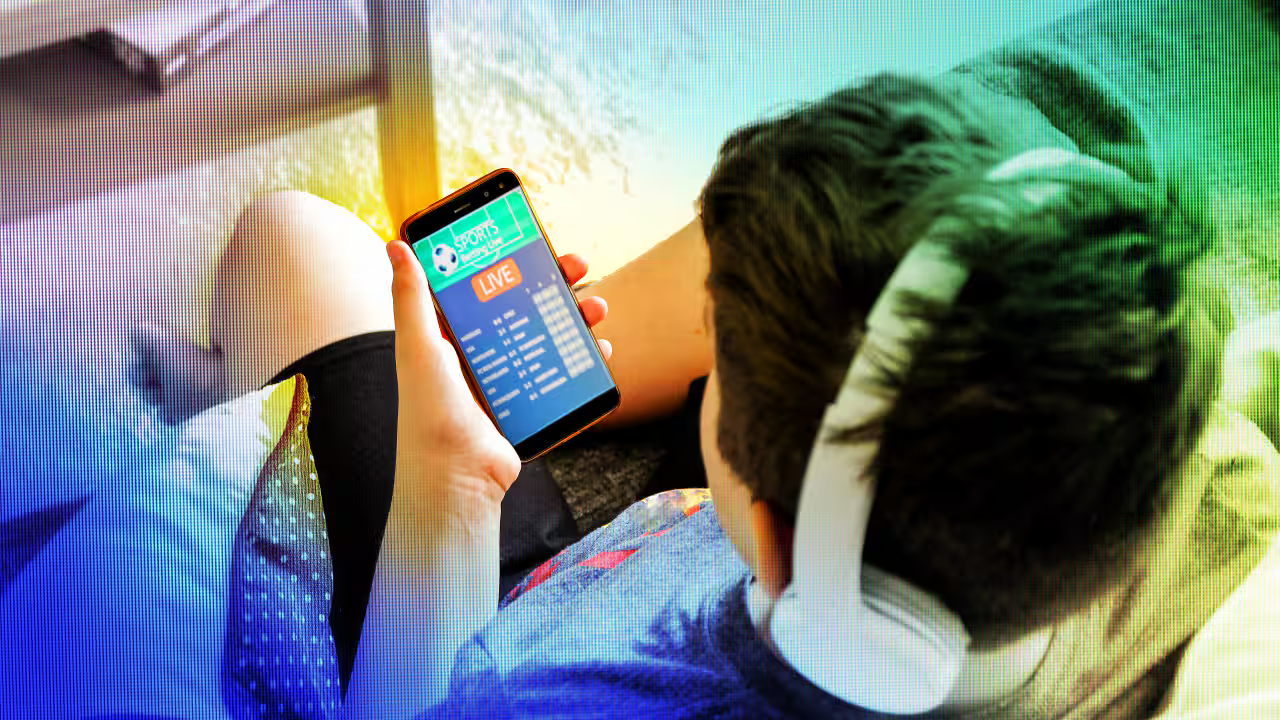
Every month in Australia, I run a couple of clinics, one in Melbourne and one in Brisbane. In both I see growing numbers of teenage boys who can navigate sports betting apps with the fluency of a seasoned punter but cannot tell you a single European capital city. I see young people who have blown through their entire birthday cash before their parents have noticed anything is wrong. I am convinced that we are raising a generation that can quote odds for a Saturday NRL fixture but struggle to read a timetable. This is not some abstract social trend. This is what I see every single week.
And it is not an accident. Online wagering is not a harmless hobby. It is a product, engineered with precision, to exploit specific vulnerabilities in the adolescent brain. The teenage prefrontal cortex, the part responsible for weighing consequences and resisting impulse, does not finish developing until the mid-twenties. These companies know this. They have paid researchers to understand it. The adolescent brain is biologically wired to chase the hit of a potential reward and discount the cost of a likely loss and the gambling industry has built an entire commercial ecosystem around that single neurological fact. It is predatory by design, not by accident.
The research is not ambiguous, and it is not distant. An estimated 902,000 Australians aged 12 to 19 are gambling right now, roughly one in three teenagers in this country. That number exceeds the combined participation in football and basketball, our two most popular youth sports. Collectively, teenagers are losing around $231 million a year on gambling activities. Among 12 to 17-year-olds the figure is $18.4 million annually. These are not rounding errors. They are a national scandal.
What makes it worse is the trajectory. A 2025 study from the Australian National University tracking gambling patterns across six years found that while overall participation has edged slightly downward, risky gambling has surged, rising from 13.7% to 19.4% in a single year, and nearly doubling since the COVID lockdowns. More than half of all Australians who gamble are now doing so primarily online. The product has migrated to the device that never leaves a teenager's hand, and the industry has followed it there with extraordinary aggression.
Research published in 2024 confirms what anyone working with young people already knows: children learn to gamble through their parents, their peers, sporting culture, and above all, advertising. Simulated gambling, the virtual slot machines and loot boxes embedded in video games, functions as a gateway, normalising the mechanics of wagering long before a young person ever opens a betting app. The industry has colonised childhood entertainment and called it gaming. It is not gaming. It is grooming.
The consequences are not abstract. We are talking about depression, destroyed finances, broken relationships and, yes, suicide. The word nobody in this industry wants to say out loud. The total cost of wagering harm in Australia was estimated at $26.8 billion for 2023 alone, including $4.9 billion in psychological harm and $8.2 billion in health harms. Australians lose more per capita on gambling than any other nation on earth, around $1,521 per person per year. We banned tobacco advertising because the moral case became impossible to argue against. The moral case here is identical, and the evidence is stronger. What exactly are we waiting for?
I know the answer, of course. Money. The gambling industry donates heavily to both major political parties. Lobbyists maintain extraordinary access to the levers of power. Politicians who might otherwise act find reasons not to. I have been here before. In New Zealand, I lobbied for a complete ban on tobacco advertising and promotion and we won. I also wrote the first article in the Medical Journal of Australia calling for the generic packaging of cigarettes, a measure the industry told us was impossible, legally unenforceable, and economically catastrophic. It became law, along with graphic pictures of rotting lungs. The tobacco industry ran exactly the same playbook the gambling industry is running today: fund research that muddies the science, buy political access, delay, obfuscate, and wait for public attention to move elsewhere. I watched that strategy fail once. I intend to watch it fail again.
In June 2023, a bipartisan parliamentary committee handed down a landmark report, You Win Some, You Lose More with 31 clear recommendations, including a phased ban on gambling advertising. The government sat on it for nearly three years. The reforms finally announced in April 2026 restrictions on ad volume, radio blackouts during school hours, a ban on celebrities in ads are a step forward, but they are not the comprehensive response the evidence demands. The Australian Medical Association called them out immediately: a step in the right direction, but not the strong response Australians need and deserve. The reforms don't even take effect until January 2027. In the meantime, the ads keep running.
So here is what still needs to happen and none of it is radical. A complete ban on wagering advertising before 10pm with no carve-outs for live sport. Not a cap, not a restriction but a ban. Mandatory real age verification on all wagering platforms, not a checkbox, not a declaration. A levy on industry profits to fund gambling harm treatment services: if you profit from the wreckage, you pay for the repairs. And raise the minimum legal age for wagering to twenty-one, giving young brains the developmental buffer they need before this industry gets its hooks in.
Our children cannot vote. They cannot make campaign donations or retain lobbying firms. They are completely dependent on adults to act in their interests and we are failing them, systematically and on purpose, because the industry has made it financially comfortable for their elected representatives to look the other way. Every footy club that takes a bookie's sponsorship while claiming to care about community kids is making a choice. Make them own it.
Write to your local member. Ask them why the reforms announced in 2026 don't begin until 2027, and why a complete advertising ban is still not on the table. Ask them to explain, without flinching, why we are still treating a $32 billion industry's comfort as more important than the mental health of a generation. The house has been winning this fight for too long. It is time we changed the odds.
